
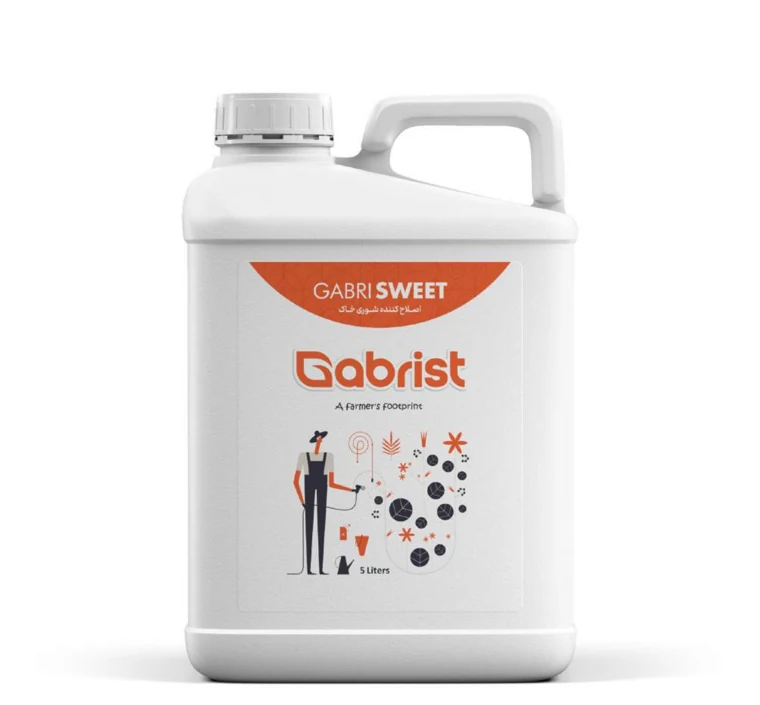
Saline soil can make it difficult for a plant to take up water even when water is present. Symptoms can resemble nutrient deficiency, which means adding fertilizer without assessment can increase salt pressure instead of helping.
Practical summary
- Salinity relates to soluble salts in the root zone.
- Irrigation water may be a significant source of salt input.
- Under saline conditions, diagnosis and water management come before fertilizer choice.
When should this matter to you?
Where leaf margins scorch, growth is reduced, symptoms occur in patches, or saline irrigation water is suspected, soil and water testing are priorities. Salinity correction is a management programme influenced by drainage, controlled leaching, water quality and crop.
A safer decision pathway
- Define the goal: growth, quality, soil condition or a suspected deficiency.
- Where feasible, test soil, water or tissue and review the farm history.
- Only after assessment, choose an appropriate product and a label-permitted application route.
- Record crop response and product quality so the next-season programme can improve.
Technical section: what matters in professional decisions
Technically, EC indicates soluble-salt concentration and osmotic stress, while full diagnosis may require SAR, specific ions and soil characteristics. A fertilizer programme should avoid unnecessary salt loading and integrate with water and drainage strategy.
Useful indicators and data to review
- Soil and water EC and, when required, SAR and specific ions
- Drainage, irrigation method and the spatial pattern of symptoms
- Crop salt tolerance and sensitive growth stages
Common mistakes
- Mistaking salinity for deficiency and adding more fertilizer
- Ignoring irrigation-water quality
- Promising rapid correction without assessing drainage and soil
Frequently asked questions
What is EC?
Electrical conductivity is used as an indicator of dissolved salts and salinity risk.
Can fertilizer fix salinity?
Salinity management usually requires water, soil and drainage assessment; an amendment may only be one possible component.
Are all plants equally sensitive to salinity?
No. Tolerance differs by crop and growth stage.
Practical decision table
| Decision area | Practical question | Useful evidence before action |
|---|---|---|
| Production objective | Is the goal growth, quality, roots or soil management? | Crop and growth stage |
| Roots and water | Could uptake or root-zone condition be limiting? | Water/substrate EC-pH, drainage and roots |
| Product choice | Does the product fit the issue and authorised method? | Label, test evidence and advice |
| Outcome review | Should the programme be repeated or changed? | Photographs, yield, quality and records |
Monitoring checklist after a decision
Work continues after product selection. Record application date, crop stage, weather, irrigation schedule, before-and-after photographs, visual response and, for professional production, test results or harvest quality. If the response is poor, review diagnosis, timing, water, roots, salinity and compatibility before simply repeating an application.
Educational website content should not encourage indiscriminate use. Rate, concentration, tank mixing and timing of every product must follow a valid product label and advice suited to the crop. Articles explain how to understand a question; they are not a universal application prescription for every crop, soil or destination country.
Regional context and supply to neighbouring and Arab countries
Across Iran and large parts of neighbouring and Arab countries, limited water, high heat, evaporation and salinity can substantially alter fertilizer response. A product that performs satisfactorily under suitable water and drainage may require a different decision where EC is high or drainage is weak. A consultation form should therefore capture destination country and city, crop type, and any available water or soil result.
For orders outside Iran, arranging supply is not the same as guaranteeing import clearance or permitted use in every country. Product registration, label language, customs and agricultural rules in the destination, transport restrictions and storage requirements must be checked before an order is completed. This is particularly important for biological products or inputs with specific storage conditions.
Technical level: why one recipe cannot suit every farm
At a technical level, crop growth is governed by the limiting factor. If water, root-zone oxygen or substrate temperature is limiting, increasing a nutrient will not necessarily produce a yield response. Nutrient availability shifts with pH, electrical conductivity (EC), organic matter, soil texture, cation exchange capacity, moisture and root-zone biological activity. Nutrients also interact; an unbalanced supply of one element can sometimes affect acquisition or performance of another.
Professional systems assess outcomes with trackable indicators: tissue testing at a recognised crop timing, soil or substrate EC and pH, irrigation-water quality, marketable yield, produce uniformity, fruit quality or root health. Measurement is not intended to increase inputs automatically. It is intended to improve source, rate, timing and placement while reducing loss and salinity risk.
Decision workflow before ordering or applying
A responsible programme can be organised into six steps. First, define the objective: increased growth, improved quality, investigation of a suspected deficiency or management of a soil constraint. Second, record the crop and its growth stage. Third, review water, soil or substrate and root condition. Fourth, use suitable testing where the economic value of the decision justifies it. Fifth, consider a related product only within valid label directions, authorised method, compatibility and crop-specific advice. Sixth, document crop response and quality.
This process allows a customer to provide useful information rather than select randomly: crop type, destination country or city, growth stage, symptoms, test result if available, product of interest and approximate volume. Such a form is easy for the grower and much more valuable for a subsequent advisory call.
Moving from observation to evidence-based diagnosis
Leaf colour, fruit size, weak growth or poor quality may be useful warnings, but a symptom alone does not prove its cause. A similar pattern can arise from nutrition, salinity, drought, excess irrigation, root disease, pest injury, temperature or chemical incompatibility. Before ordering or applying an input, record the pattern: is it across the whole field or restricted to patches? Did it begin after a change in irrigation or spraying? Are younger or older leaves affected first?
For consequential decisions, soil and irrigation-water testing, and where appropriate leaf or tissue analysis, provide a stronger basis. Soil testing describes the root-zone supply environment; water analysis helps reveal salt load, bicarbonate or source-water limitations; tissue analysis indicates what the crop has actually taken up. Sampling must match the crop, zone and timing because a precise laboratory result from a poor sample can still mislead management.
Connecting the topic to a real decision
Salinity makes water uptake harder by increasing soluble salt load, so indiscriminate addition of soluble fertilizer can intensify stress. Salinity is also not identical to sodicity; the distinction must be established before an amendment is selected.
Related products to consider after diagnosis

This page is educational. Final product choice and application must follow the product label, destination-country rules and crop-specific advice informed by appropriate assessment.
Scientific references and responsibility note
- FAO: Plant nutrition for food security — a guide for integrated nutrient management
- FAO: Soil and plant testing and analysis as a basis of fertilizer recommendations
- FAO: Water quality for agriculture and salinity management
This page is educational. Final product choice and application must follow the product label, destination-country rules and crop-specific advice informed by appropriate assessment.